
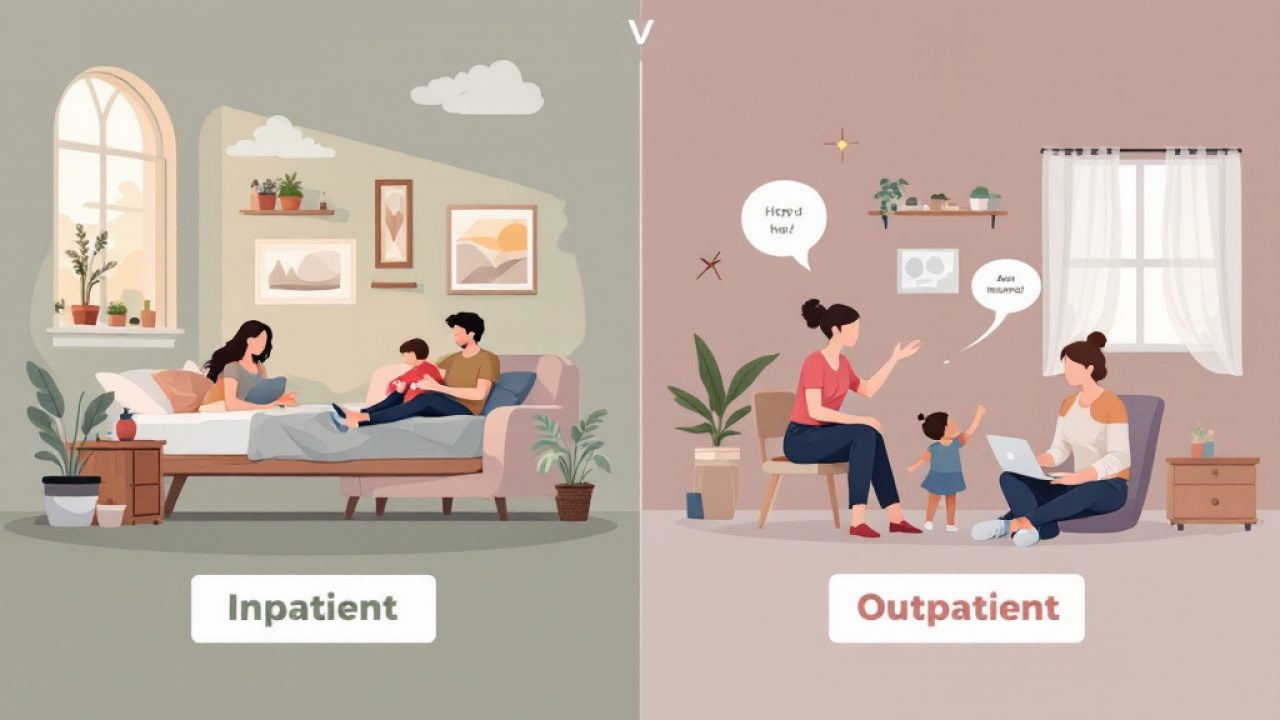
Compare rehab program types
When you’re weighing the difference between inpatient and outpatient rehab, understanding each level of care is crucial. Inpatient, or residential, treatment offers around-the-clock support in a structured environment. Outpatient services, ranging from partial hospitalization programs (PHP) to intensive outpatient programs (IOP), let you maintain daily routines while attending therapy. Choosing between these options involves assessing your unique challenges, treatment goals, and personal responsibilities.
Inpatient rehab overview
In an inpatient setting, you live at the facility for the duration of your program. This immersive approach provides:
- 24-hour medical and emotional support
- Structured schedule with therapy, wellness activities, and case management
- Medically supervised detox when needed
- A drug-free environment that minimizes relapse triggers
Licensed facilities typically offer three phases of residential care: medically assisted detox, short-term treatment (14–30 days), and long-term residential treatment (60–90 days or more) [1]. For individuals with severe dependence or co-occurring mental health conditions, this comprehensive care can be life-changing.
Outpatient rehab overview
Outpatient rehab allows you to live at home while attending scheduled treatment sessions. Levels of outpatient care include:
- Partial hospitalization program (PHP): full-day treatment, 5 days a week
- Intensive outpatient program (IOP): 3–5 days weekly, 3 hours per day
- Standard outpatient care: 1–3 sessions per week
These programs focus on relapse prevention, psychoeducation, and skill building. You’ll participate in individual counseling, group therapy, and family sessions, then return to your daily life. This flexibility makes outpatient services ideal if you have work, school, or family obligations.
Evaluate program structure
Beyond residence, program structure shapes your recovery journey. Compare how each setting addresses scheduling and therapies.
Daily schedule and intensity
Inpatient
- Wake-up between 6 a.m. and 7 a.m.
- Morning meditation or yoga
- Individual therapy, group sessions, and case management
- Lunch and recreational activities
- Afternoon wellness workshops
- Evening peer support meetings
Outpatient
- PHP: 6 hours of therapy and education daily
- IOP: 3 hours per day, 3–5 days weekly
- Standard outpatient: variable hours based on your needs
Therapeutic modalities
Both settings use evidence-based approaches, including:
- Cognitive behavioral therapy (CBT)
- Dialectical behavior therapy (DBT)
- Medication management when appropriate
- Holistic therapies (yoga, art therapy, mindfulness)
Structured programs often tailor these therapies to address gender-specific issues, trauma, or co-occurring disorders in individualized plans for recovery.
Review cost considerations
Financial factors should never deter you from seeking help. Understanding cost ranges and payment options empowers you to plan effectively.
Cost of inpatient treatment
Costs vary widely based on facility location, amenities, and duration:
| Program type | Average cost for 30 days |
|---|---|
| Basic inpatient | $6,000–$30,000 [2] |
| Luxury residential | $30,000–$80,000 [3] |
Most insurance plans cover some portion of residential care. You may also explore sliding-scale fees, payment plans, or financing.
Cost of outpatient services
Outpatient options tend to be more affordable:
| Outpatient level | Cost range |
|---|---|
| PHP | $350–$450 per day [2] |
| IOP | $2,000–$10,000 total [2] |
| Standard outpatient | Under $1,000 total [4] |
Using insurance is common and can reduce out-of-pocket expenses significantly. Verify your benefits and ask providers about coverage for both inpatient and outpatient care.
Assess treatment duration
Length of stay influences outcomes. Research shows longer programs often yield higher success rates.
Typical inpatient lengths
- Detox phase: 5–10 days
- Short-term residential: 14–30 days
- Long-term residential: 60–90 days or more [5]
Extended residential stays allow you to build a solid sober support system and develop relapse prevention tools.
Outpatient program timelines
- PHP: usually 2–4 weeks
- IOP: 3–6 months on average
- Standard outpatient: variable, depending on progress
Many clients start with 30 days of inpatient care and transition into outpatient treatment for 3–6 months, which supports lasting recovery [4].
Step-down care
Moving from residential to outpatient services offers continuity. Explore step-down care after residential treatment and transitioning from inpatient to outpatient care to ensure a seamless progression.
Determine level of care
Choosing the right setting depends on your addiction history, medical needs, and support system. Clinical assessments often guide this decision.
When to choose inpatient
Consider residential treatment if you:
- Face severe withdrawal symptoms requiring medical monitoring
- Have had multiple relapses
- Experience co-occurring mental health disorders
- Lack a stable, substance-free home environment
Learn more about how to know if you need inpatient rehab.
PHP vs IOP
Partial hospitalization programs offer intensive, day-long care for those needing more support than standard outpatient but less than full residential. Intensive outpatient treatment works well if you need significant structure yet can maintain home responsibilities. Compare both in php vs iop addiction treatment explained.
Identify decision factors
Your personal circumstances shape the optimal level of care. Reflect on these key factors:
Addiction severity and history
- Duration and intensity of substance use
- Previous treatment outcomes
- Medical complications or psychiatric diagnoses
Personal responsibilities
- Work or school commitments
- Family or caregiving duties
- Transportation and housing stability
Support network
- Presence of sober living environments
- Family involvement in treatment
- Access to peer support groups
Balancing these elements ensures you select a program that fits your lifestyle and recovery goals. For more guidance, see how to choose the right addiction treatment program.
Explore program benefits
Each treatment setting offers unique advantages. Consider what will best support your journey.
Supportive environment
Inpatient rehab provides a controlled atmosphere free from outside triggers. You’ll benefit from:
- Daily check-ins with medical staff
- Peer support within a therapeutic community
- Opportunities for deep self-reflection
Conversely, outpatient care fosters real-world practice of coping skills, reinforcing strategies learned in therapy.
Community and camaraderie
Gender-specific or peer-focused groups can enhance comfort and understanding. Shared experiences promote accountability and long-term connection. Whether in a residential center or a group therapy session, this camaraderie builds resilience.
Plan your next steps
With a clearer picture of residential, PHP, and outpatient programs, you can take action toward recovery in Charlotte, NC.
Evaluating Charlotte programs
Research local options, comparing amenities, staff credentials, and specialized offerings. Explore residential vs outpatient rehab in charlotte nc for detailed comparisons of facilities in your area.
Contacting Nova rehab
Nova Rehab offers a structured, clinically grounded environment tailored to your needs. Our comprehensive care model guides you through detox, residential treatment, and outpatient programs. Reach out to our admissions team today to discuss personalized treatment plans and financial options. You deserve the support necessary for lasting recovery.
For more information on continuing care, read about continuum of care in addiction recovery and benefits of long-term addiction treatment. Remember, making the right choice now can change the course of your life.