
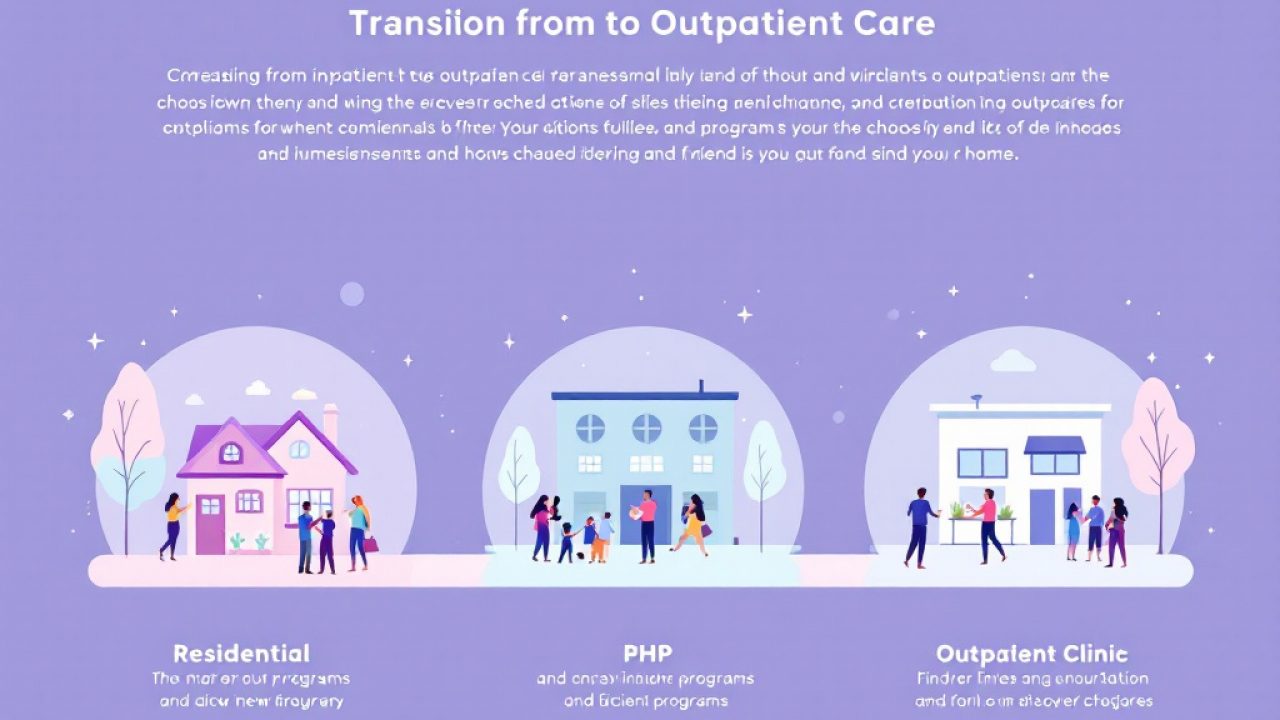
Transitioning from inpatient to outpatient care marks a pivotal step in your recovery journey. By moving from the structured environment of residential treatment into a less intensive setting, you can build on the progress you’ve made while regaining independence. However, navigating this shift successfully requires careful planning, clear communication, and ongoing support.
In Charlotte, NC, adults and families comparing structured treatment options often weigh residential programs against partial hospitalization (PHP) and intensive outpatient (IOP) levels. Whether you’re concluding a stay in inpatient rehab or considering your next move, understanding each program’s features, preparing for common challenges, and leveraging evidence-based strategies will help you thrive in the weeks and months ahead.
Compare levels of care
When you’re choosing between inpatient, PHP, IOP, and standard outpatient programs, it helps to see how they differ in setting, structure, and intensity. Use the table below as a quick reference:
| Program | Setting | Hours per week | Typical length | Key features |
|---|---|---|---|---|
| Inpatient treatment | Residential facility | 24/7 supervision | 30–90 days | Medical detox, round-the-clock care, intensive therapy |
| Partial hospitalization program (PHP) | Day hospital | 20–25 | 4–8 weeks | Structured day schedule, group and individual therapy |
| Intensive outpatient program (IOP) | Clinic or center | 9–19 | 8–12 weeks | Evening or weekend sessions, peer support |
| Standard outpatient care | Clinic visits | 1–5 | Ongoing | Flexible scheduling, less structure |
Inpatient treatment
Inpatient rehab offers a safe, distraction-free environment where you live onsite and focus solely on recovery. The comprehensive nature of residential care helps you stabilize, undergo medical detox if needed, and engage in daily therapy under constant supervision. If you’re wondering how it differs from less intensive options, see our guide on the difference between inpatient and outpatient rehab.
Partial hospitalization program (PHP)
PHP serves as a step-down level after inpatient care or as an alternative for those who need significant support but don’t require 24-hour supervision. You’ll spend most of your day in therapy—typically five days per week—returning home in the evenings. To learn more about this option, read our partial hospitalization program overview or dive deeper into how PHP stacks up against IOP in our php vs iop addiction treatment explained.
Intensive outpatient program (IOP)
In IOP you attend treatment sessions several times a week, often outside typical work hours. This level offers more flexibility than PHP but still provides structured group therapy, individual counseling, and skills training. If you want details on how it functions, check out how intensive outpatient treatment works.
Standard outpatient care
Outpatient rehab involves regular appointments for individual or group therapy with minimal structure. It’s ideal if you’re maintaining sobriety and need ongoing support without a rigid schedule. See what to expect in our what to expect during outpatient rehab.
Plan your transition process
Effective preparation can make your transition smoother and reduce risks of relapse or readmission. Focus on building a personalized road map that addresses your unique needs and circumstances.
Develop a personalized discharge plan
A comprehensive discharge plan outlines your goals, schedules follow-up appointments, and identifies resources in your community. Consider:
- Your ideal level of care based on severity, co-occurring conditions, and support system [1].
- Medication reconciliation to verify current prescriptions and prevent errors during transition [2].
- Linking with aftercare services such as step-down programs [3] and peer support groups.
- SMART goals (Specific, Measurable, Achievable, Relevant, Time-bound) for your early weeks of outpatient care.
Coordinate with your healthcare team
Collaboration among your treatment providers, primary care physician, and psychiatrist ensures continuity of care. Best practices include:
- Scheduling your first outpatient or follow-up visit within 7–14 days of discharge, which increases attendance rates and reduces adverse outcomes [4].
- Sharing discharge summaries, medication lists, and treatment goals across all team members.
- Engaging a pharmacist for medication counseling and reconciliation to reduce errors—up to 60% of medication mistakes occur during transitions [2].
Engage your support network
Your family, friends, and peers play a vital role in maintaining motivation and accountability. You can:
- Invite loved ones to discharge planning meetings to set expectations for support and boundaries.
- Designate a trusted contact who checks in daily on your progress and helps with logistics.
- Join peer-led groups where you share experiences and coping strategies with others in your situation.
Manage common challenges
As you shift into outpatient care, you may face barriers that threaten your stability. Recognizing and addressing these issues early can keep you on track.
Address medication errors
Medication errors after discharge can lead to setbacks, readmissions, or adverse events. To minimize risks:
- Confirm dosages, timing, and purpose of each prescription with your care team.
- Use a pill organizer or mobile app to track your meds.
- Include family members or caregivers in medication management discussions.
- Request pharmacy-led counseling before you leave the facility [5].
Maintain treatment adherence
Roughly 30%–50% of patients skip follow-up appointments within 30 days of hospitalization, increasing risks of relapse, suicide, or homelessness [4]. To boost adherence:
- Set calendar reminders and alarms for every appointment.
- Opt for telehealth sessions if transportation or timing is an issue.
- Enlist an accountability partner who attends virtual sessions with you.
Handle scheduling and logistics
Balancing treatment with work, school, or family can feel overwhelming. Try these tactics:
- Block out treatment times on your weekly calendar as non-negotiable appointments.
- Coordinate childcare or ride-share in advance.
- Explore flexible outpatient options in Charlotte, like evening or weekend sessions [6].
Maximize your recovery routine
Outpatient care gives you more freedom but also demands greater self-management. Building a strong daily routine supports sustained progress.
Incorporate therapies and activities
A well-rounded schedule may include:
- Cognitive behavioral therapy and other evidence-based addiction treatment options to tackle thought patterns and triggers.
- Group workshops on relapse prevention and life skills.
- Holistic practices such as mindfulness, yoga, or art therapy to foster well-being.
Maintain healthy habits
Recovery thrives on consistency. Focus on:
- Nutrient-rich meals that stabilize mood and energy.
- Regular physical activity—aim for 30 minutes most days.
- 7–9 hours of sleep per night to support mental resilience.
Measure your progress
Tracking milestones helps you stay motivated. Consider:
- Journaling daily reflections and triggers.
- Using smartphone apps to log sobriety days and mood.
- Celebrating small wins, like completing your first week of outpatient sessions.
Leverage evidence-based strategies
Following proven approaches in your aftercare can reduce readmissions and enhance outcomes.
Follow aftercare best practices
Structured aftercare often includes:
- Continued therapy, either individual or group [7].
- Peer support organizations such as 12-step or SMART Recovery.
- Family education and involvement in ongoing treatment planning.
Use technology and tools
Digital solutions streamline transitions:
- Telepsychiatry for remote counseling.
- Medication reminder apps with refill alerts.
- Online support forums that connect you with peers 24/7.
Set realistic goals
Break larger recovery aims into manageable steps:
- Attend all outpatient appointments for 30 days.
- Practice two relapse-prevention techniques per week.
- Reconnect with a hobby or social activity that supports sobriety.
Choose the right care level
Selecting the program that fits your needs ensures you’re neither under- nor over-served.
Evaluate program features
Look for:
- Credentialed clinicians and evidence-based modalities [8].
- Flexibility to adjust intensity as you progress.
- Family involvement options and peer support networks.
Assess your needs
Your ideal level depends on:
- Severity of substance use and co-occurring disorders.
- Work, family, or legal obligations that affect availability.
- Financial considerations and insurance coverage.
Explore Nova’s structured approach
At Nova Addiction Treatment Center in Charlotte, we guide you through each care phase with a clinically grounded framework:
- Personalized treatment plans tailored to your history and goals [9].
- Seamless step-down care from inpatient to PHP, IOP, and outpatient levels in our continuum of care [10].
- Medication management protocols to reduce errors and ensure safety.
- Family education sessions to strengthen your support system.
- Telehealth follow-up options for added convenience.
Discover why we’re one of the best rehab programs in Charlotte NC.
Take proactive next steps
Moving forward with confidence starts with a few simple actions you can take today.
Contact a specialist
Reach out for a confidential consultation. Our team will assess your history, current needs, and goals without obligation.
Schedule a consultation
Set up a call or in-person visit to tour our facility, meet clinicians, and explore program details.
Access resources
Browse our blog for insights on stages of addiction treatment and recovery, detox vs rehab – what’s the difference, and more.
Overall, thriving while transitioning from inpatient to outpatient care means combining careful planning, strong support, and evidence-based practices. By understanding your options—whether inpatient, PHP, IOP, or standard outpatient—you can choose the right level of care for your situation. At Nova, we’re here to guide you through every step, empowering you to build lasting recovery and reclaim your life. Call us today to take the next step toward a brighter, healthier future.
References
- (how to choose the right addiction treatment program)
- (AHRQ Patient Safety Network)
- (step-down care after residential treatment)
- (NCBI)
- (PSNet)
- (residential vs outpatient rehab in charlotte nc)
- (what happens after completing rehab)
- (what makes a good rehab program)
- (personalized treatment plans for recovery)
- (continuum of care in addiction recovery)